
Proteolysis-targeting chimeras (PROTACs) are an exciting new drug modality that degrade disease-driving proteins instead of simply inhibiting them. Our group is exploring multiple aspects of PROTAC design and application. One project focuses on understanding oral absorption and permeability, using advanced assays and predictive models to guide the design of PROTACs with favourable drug-like properties.
A second project aims to map the off-target degradome, proteins unintentionally degraded by PROTACs, to improve safety and selectivity.
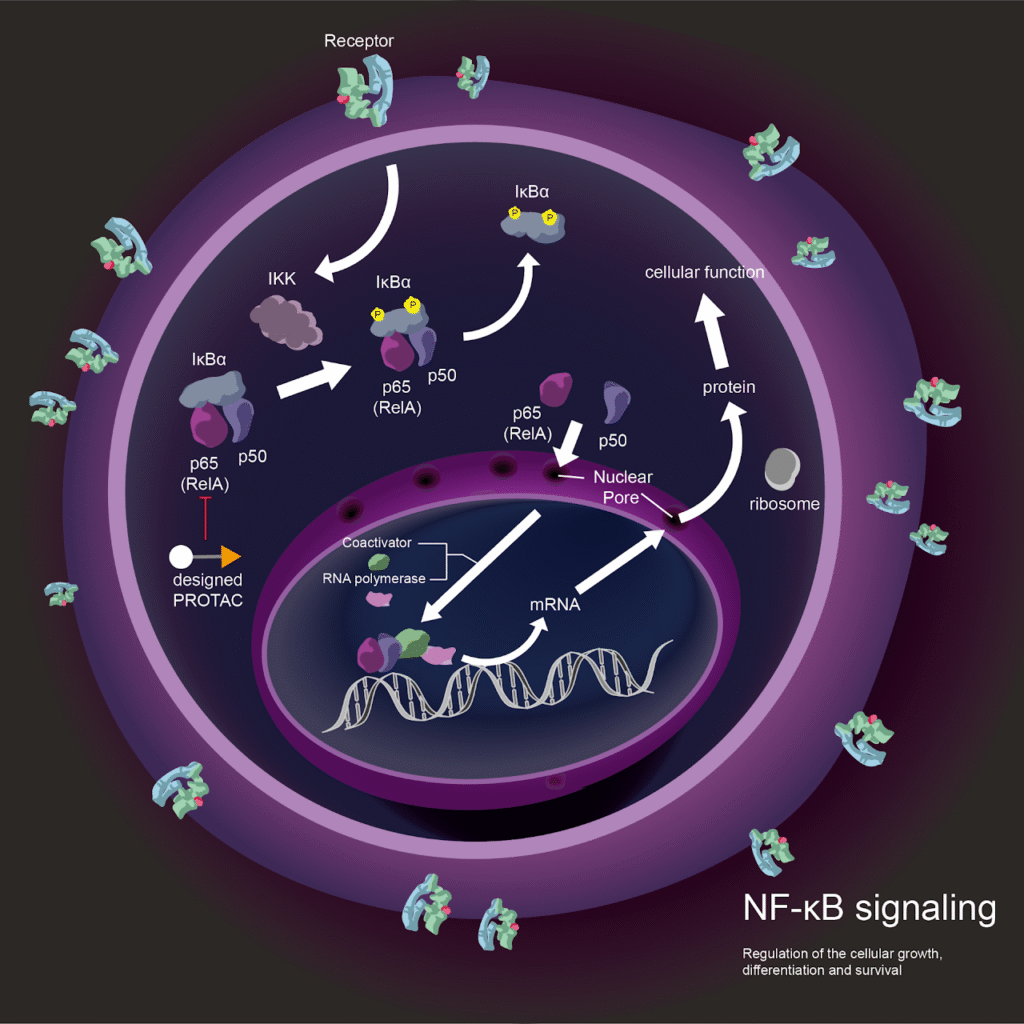
Our third project develops NF-κB-targeting PROTACs, designed to selectively degrade RelA/p65 and NIK, key regulators of tumour survival, therapy resistance, and inflammation. We recently achieved the first selective degradation of RelA/p65 using a pyrrolobenzodiazepine (PBD)-based ligand, providing proof of concept for this approach.
These efforts are conducted in collaboration with Dr Graeme Hewitt (KCL), Professor Ben Forbes and Dr Andrew Chan (KCL) and Professor Chris Pepper (University of Sussex). The projects are funded by AstraZeneca and the Medical Research Council. Collectively, our PROTAC projects aim to unlock new opportunities in cancer and inflammatory disease therapy, tackling targets long considered “undruggable” and creating drug candidates with transformative potential.