
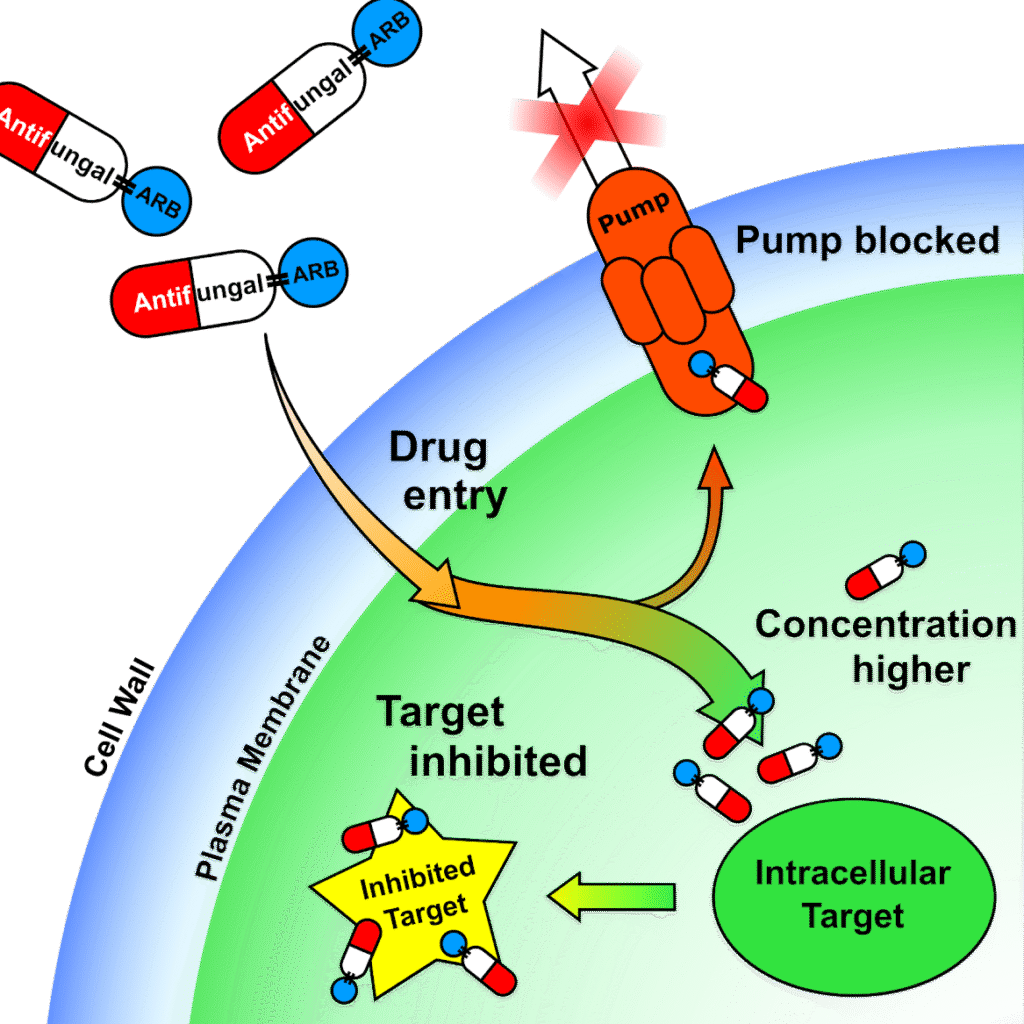
Invasive fungal infections are rising globally, driven by multidrug-resistant pathogens such as Candida auris. Resistance often arises through efflux pumps that eject antifungal drugs, reducing treatment effectiveness. To address this, we adapted our Efflux Resistant Breaker (ERB) technology to antifungal discovery. Using computational modelling, we discovered that inhibitors bind to hydrophobic regions of efflux pumps, while exported substrates interact with hydrophilic pockets. By modifying azole antifungals with ERB fragments, we created molecules that retain their ability to inhibit fungal targets while avoiding efflux.
These ERB-azoles re-sensitise resistant strains of C. auris, C. glabrata, C. krusei, C. tropicalis, and C. parapsilosis, with sub-microgram minimum inhibitory concentrations. In parallel, we use chemical microbiology approaches to dissect efflux-mediated resistance in Candida species, helping to identify new therapeutic opportunities. These projects are funded by the Medical Research Council, the Commonwealth Commission, and the China Scholarship Council. Our long-term aim is to provide a new class of antifungal drugs with broad-spectrum activity against resistant species, addressing an urgent global health priority and helping reduce the growing burden of invasive fungal disease.